
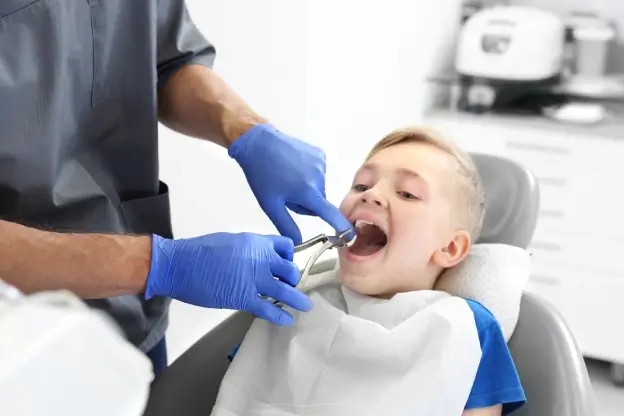
As your child grows, their baby teeth naturally make way for permanent teeth. Dentists generally recommend waiting for the primary teeth to fall out because they help guide the proper alignment of the permanent teeth and maintain a healthy bite. But in some cases, a baby tooth may stay stuck, which can block the normal eruption of its permanent counterpart.
Keep reading this blog to learn when baby tooth extractions may be necessary and what you should expect from the procedure and recovery.
When Do Baby Teeth Need Extracting?
In the majority of cases, pediatric dentists aim to preserve baby teeth until they fall out naturally. However, certain situations where extracting a baby tooth might be the best option include:
- If a tooth is too decayed or damaged to be repaired with fillings or crowns.
- If a baby tooth remains stuck in its place, preventing the normal eruption of the permanent tooth.
- If an infected baby tooth cannot be treated with pulpotomy or pulpectomy, risking the health of the adjacent teeth and gums.
- If space is required for orthodontic treatment to correct the alignment of the remaining teeth.
What Happens During a Pediatric Tooth Extraction?
Before the procedure, your child’s dentist will take digital X-rays to assess root resorption, the position of the permanent successor, surrounding bone, and any anatomic concerns. Most baby teeth can be removed through a simple extraction, which is a quick and minimally invasive process. Deeply retained teeth may require a minor surgical approach.
To ensure a comfortable experience, the dentist uses local anesthesia to numb the area and may add nitrous oxide to help your child relax. Once your child is comfortable, they gently loosen the affected tooth and remove it.
Afterward, they place a piece of gauze over the extraction site to stop any minor bleeding. In some cases, a space maintainer may be inserted immediately or at a follow-up visit to preserve room for the permanent tooth.
Will My Child Feel Pain During the Extraction?
It is completely normal to feel concerned about whether your child will feel pain during a tooth extraction. The good news is that the procedure is well-tolerated, due to the use of anesthesia or sedation techniques, and most children do not feel any discomfort during the procedure.
Once the anesthesia wears off, your child may experience mild soreness, but this can be easily managed with over-the-counter pain relief recommended by your dentist.
Tips for a Smooth and Painless Recovery After Extraction
Once your child’s baby tooth has been extracted, follow these guidelines to ensure proper recovery:
- Keep the gauze in place until the bleeding stops.
- Wait until the numbness wears off before eating or drinking.
- Stick to soft, cool foods like yogurt, smoothies, and mashed potatoes.
- Avoid rinsing, spitting forcefully, or using a straw for the first 24 hours.
- Don’t chew on the side of the mouth where the tooth was removed.
- Apply a cold compress 10–15 minutes on, 10–15 off during the first few hours to reduce swelling or discomfort.
- Remind your child not to touch the extraction site with their tongue or fingers.
Final Words
While it is important to wait for baby teeth to fall out naturally, they may need to be extracted in certain cases to make way for permanent teeth. If your child experiences any issues with their baby teeth, consult Dr. Neil Dean at KC Kids Dental today. Contact our team at (816) 670-3450 to book an appointment.
